

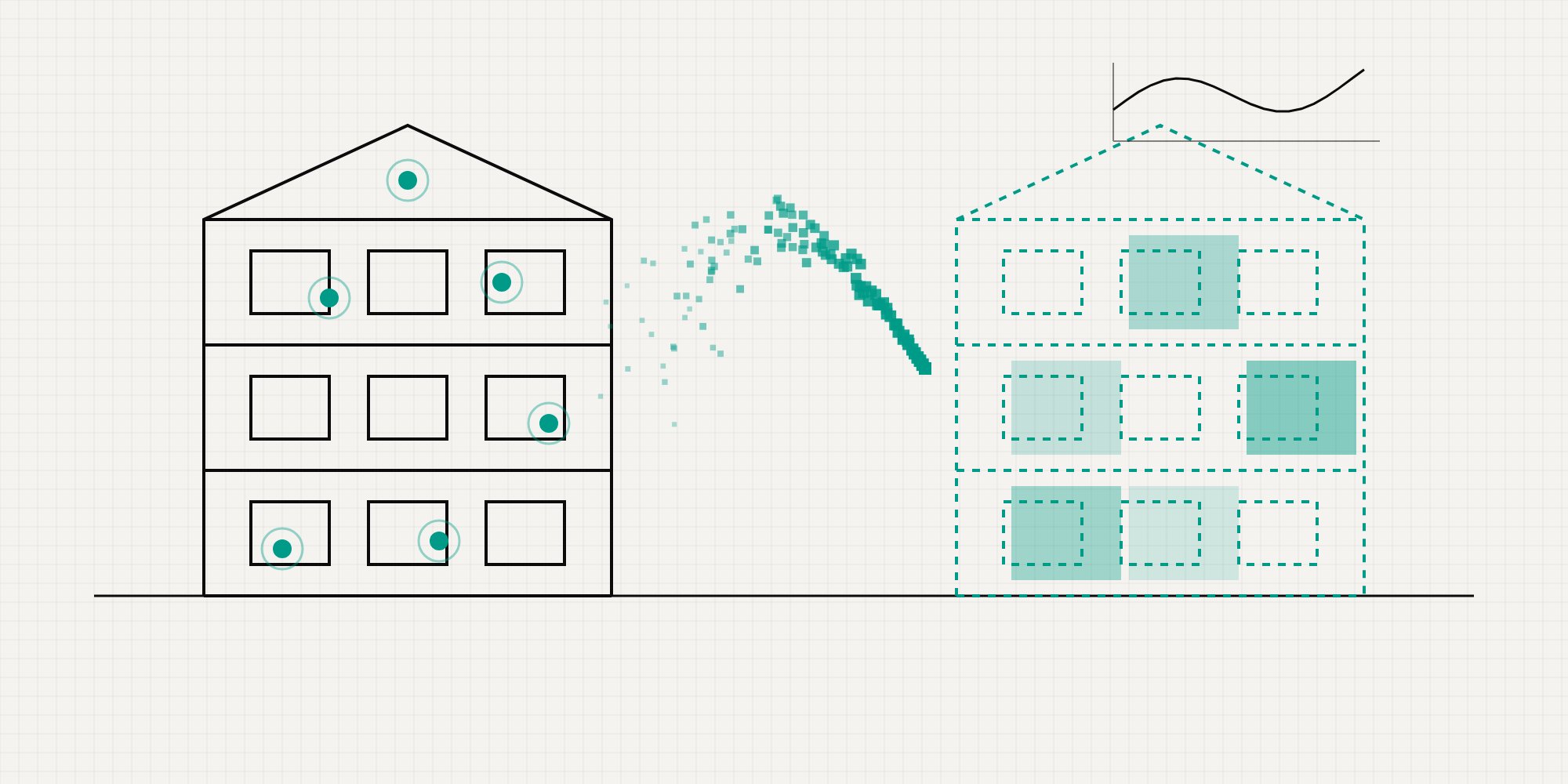
This research project investigated how indoor environmental data can reveal persistent overheating and help identify periods when occupants face greater thermal exposure. The work addressed overheating as a changing condition shaped by the intensity, duration, and frequency of heat.
Using open-access residential monitoring data recorded at one-minute intervals, the project analysed temperature, humidity, pressure, and lighting conditions. A Python-based workflow was developed to prepare the data, examine daily and seasonal patterns, and assess relationships between environmental conditions and overheating.
A composite risk index classified conditions into low, moderate, high, and severe categories. Predictive analysis also examined how previous temperature conditions could help anticipate future overheating.
The project produced a structured framework for turning environmental measurements into practical thermal-risk information. Its potential applications include targeted cooling strategies, early-warning systems, and energy-aware building management, supporting further development of more resilient indoor environments.