
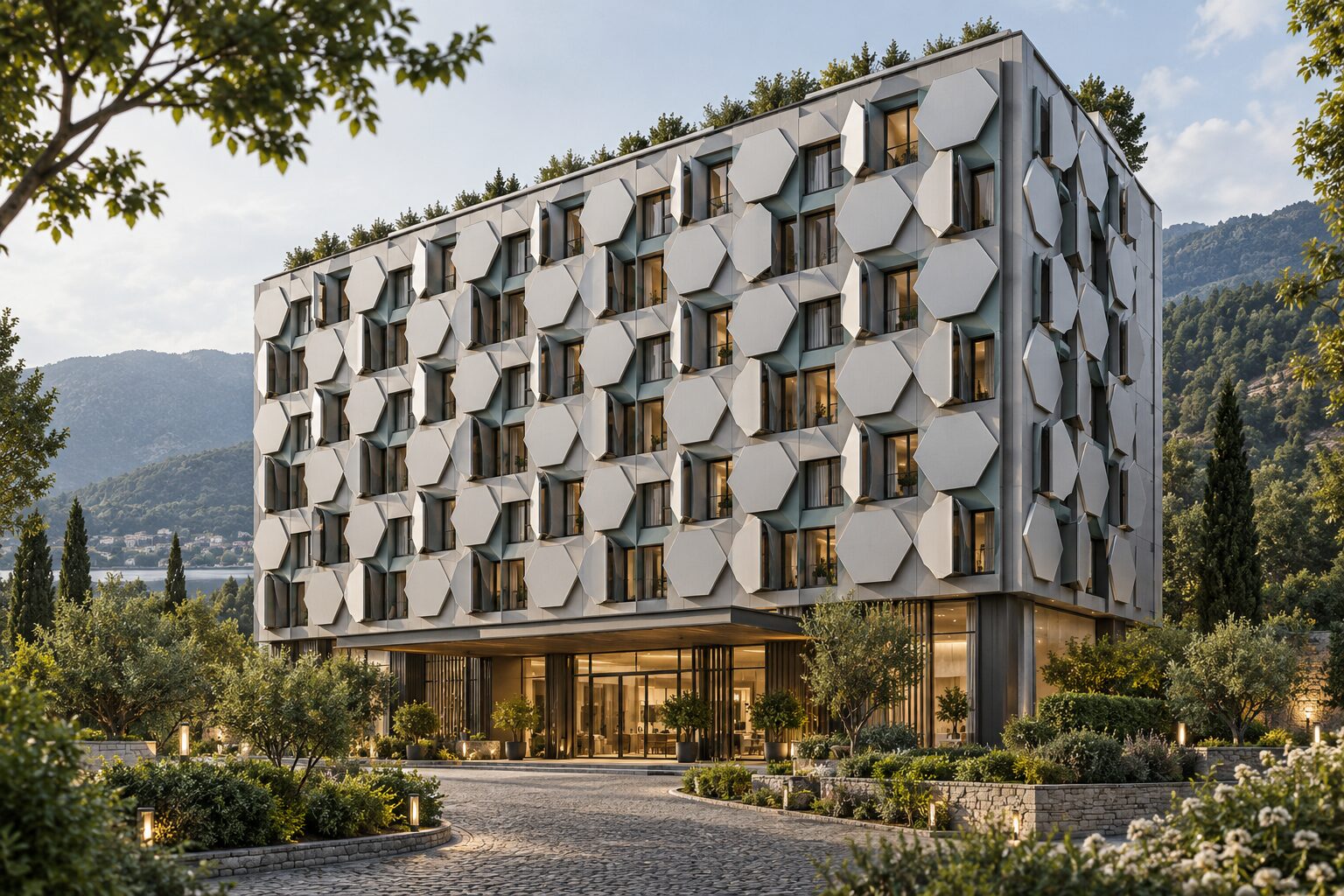
This research project examined how responsive façade systems could improve the environmental performance of a hotel in northern Iran. The study compared three kinetic façade prototypes — Hexagon, Rec-Tri Pro, and Al Bahar-inspired systems — using a common hotel case study and simulation framework.
The research team used parametric modelling, environmental simulation, and multi-objective genetic-algorithm optimisation to evaluate energy use, daylight availability, glare, and thermal comfort. More than 1,800 simulation-based optimisation runs were conducted to explore different façade configurations.
The results showed that each system offered different performance strengths. The Rec-Tri Pro system achieved the lowest optimised energy use among the tested configurations, while the comparative assessment highlighted trade-offs between energy and comfort criteria.
The project demonstrates how environmental modelling can support façade decisions during the early stages of hotel design.